

Community Educator Portal
Your home for evidence-led resources, client conversation scripts and your educator benefits, all in one place.
Prolong Lash
Community Educator Portal
This space is reserved for invited Community Educators. Enter your access code to continue.
Welcome
Good to have you here.
This is your home for evidence-led resources, conversation support, and everything that comes with being a Prolong Lash Community Educator.
What's new
Just launched
The Hypochlorous Acid Spray has landed. It's an antimicrobial add-on for the lash line, not a replacement for daily cleansing, useful before or after a service, or as a refresh in between. The myths worth knowing before clients ask are covered in Myths & Facts.
Knowledge Library
Evidence-led resources
The facts behind the claims, kept accurate and easy to reference.
Why a claim alone isn't proof
Cosmetic regulations in most countries don't require a brand to prove its marketing claims before selling a product. That means a cleanser can legally say "safe for eyes" without ever being tested on a human eye in a clinical setting.
A common path to market looks like this: a brand buys a ready-made formula from an overseas manufacturer, the manufacturer verbally assures them it's "eye safe," the brand prints that claim on the label, and no independent testing ever happens. It looks professional. It just isn't backed by evidence.
What a lash cleanser should actually be tested for
- Ophthalmology testing — supervised by an ophthalmologist, to confirm no stinging, irritation, redness or harm to the eyes
- Dermatology testing — confirms the formula doesn't cause dryness, itching or irritation, including on sensitive skin
- HRIPT allergy testing — the gold standard for detecting allergic reactions and sensitisation over repeated exposure
- Microbiology and stability testing — confirms harmful microbes can't grow in the formula, and that it stays safe for its full shelf life
- Global compliance documentation — FDA MoCRA registration or EU/UK Cosmetic Product Safety Reports, confirming a verified safety file exists
If a brand can't point to which of these tests were done, or share results, the safety claim is unverified, however confident the packaging sounds.
What Prolong Lash's testing actually showed
Ophthalmology: applied around the lash line and lash base on 30 participants, including contact lens wearers and people with sensitive eyes, over 14 days under ophthalmologist supervision. Result: zero stinging, burning, watering, redness or change to the eye surface.
Dermatology: repeated application across a range of skin types, including sensitive skin. Result: no irritation, redness or dryness.
HRIPT: 71 participants wore patches containing the cleanser repeatedly over three weeks, with re-exposure to check for delayed allergic response. Result: zero irritation, zero allergic sensitisation.
Microbiology: every batch undergoes ISO 17516 microbial analysis, with challenge testing against microbes including Staph aureus, Pseudomonas aeruginosa, Candida albicans and Aspergillus brasiliensis. Result: routine testing shows 100 CFU/g (essentially sterile), with all introduced microbes eliminated within days.
Ingredient integrity
- Over 95% naturally derived ingredients (Foaming Pump only)
- Naturally derived surfactants
- No synthetic fragrance — scent comes from steam-distilled rose water
- No sulphates, parabens or phthalates
- Oil-free and extension-safe
- 100% vegan and cruelty-free
Note for educators: the 95%+ naturally derived figure applies specifically to the Foaming Pump. Please don't apply that number to the Concentrate or other products unless it's confirmed for that formulation.
Where the rose water comes from: fresh rose petals are steam-distilled in a sealed copper still, the steam carries the natural aromatic compounds through, and it's then condensed back down into the distilled rose water used in the formula, no added fragrance, chemicals or alcohol. It's naturally derived, oil-free and formulated to reduce pore congestion, and specifically designed to work in harmony with lash adhesive rather than against it.
Marketing language red flags
Terms worth questioning when they appear without evidence behind them:
- "Lab tested" with no detail on what was tested
- "Gentle formula" with no dermatology testing to support it
- "Trusted by lash artists" with no safety file to point to
- "Lash-safe" with no ophthalmologist testing behind it
- "Hypoallergenic" with no HRIPT report
Catchy naming (whipped, bubble, foam, mist) doesn't tell you anything about safety either. It's fine to ask a brand to show its evidence, and clients deserve that same standard.
These go beyond the one-line version clients get. The mechanism behind each myth is what actually lets you answer follow-up questions with confidence, rather than just repeating a talking point.
MythYou can't wash lash extensions after application.
FactCyanoacrylate lash adhesive cures through a reaction with ambient moisture, not by simple drying. Older, thicker formulations needed more time and humidity to fully polymerise, which is where the 24–48 hour rule came from: introducing water too early could trigger an uneven, exothermic reaction known as shock polymerisation, clouding the adhesive and weakening the bond. Fast-curing modern formulations complete that reaction in a much shorter window, often before the client leaves the chair. Once cured, washing doesn't disturb the bond, and it clears residual adhesive vapour and monomer, which is one of the more common causes of delayed eye irritation after a fresh set.
MythAny makeup remover or baby shampoo will clean extensions properly.
FactBaby shampoo is formulated at a near-neutral pH with mild surfactants suited to scalp skin, not to cutting through sebum and adhesive residue at the lash line. Many makeup removers rely on oils or silicone solvents to dissolve makeup, and those same oils can slowly solvate the adhesive bond on contact, softening it over repeated use. Both also tend to leave residue at the follicle opening, and that ongoing buildup is a known contributor to blepharitis and Demodex overgrowth. A cleanser formulated for extensions clears oil and debris without leaving that residue or contacting the bond.
MythExtensions shouldn't get wet, or don't need daily washing.
FactThe lash line is a warm, enclosed, naturally humid environment, exactly the conditions biofilm-forming bacteria and Demodex mites need to establish. Daily cleansing disrupts that environment before a biofilm can mature, which is why consistent cleansing is associated with lower rates of blepharitis and better retention, not worse.
MythNatural lashes don't need aftercare, only extensions do.
FactNatural lashes cycle through anagen (growth), catagen (transition) and telogen (shedding) phases, and follicle health during that cycle affects the quality of what grows back. Debris sitting at the follicle opening can trigger low-grade folliculitis, which disrupts that cycle. Cleansing the natural lash line, not just the extensions, protects the follicles quietly regrowing underneath.
MythYou can't wear eye makeup with extensions.
FactThe issue is oil and wax content, not eye makeup as a category. Traditional mascara uses waxes and oils to build volume and hold curl, and those ingredients solvate the adhesive bond over time. Waterproof formulas compound the problem, since they're designed to resist the gentle, water-based removal that's safe for extensions, which usually pushes clients toward rubbing or oil-based removers that cause mechanical and chemical damage at once. Oil-free, extension-safe formulas avoid the issue entirely.
MythAftercare doesn't really affect how long extensions last.
FactCyanoacrylate bonds break down over time through hydrolysis and oxidation, and both processes accelerate in the presence of oil, sweat and cosmetic residue sitting at the base of the extension. Removing that layer daily doesn't just tidy the lash line, it slows the chemical breakdown of the bond itself.
MythWearing extensions damages natural lashes.
FactThe determining factor is load, not extensions in principle. Extension diameter and length should stay proportional to the natural lash's own diameter to avoid mechanical strain on the follicle. Overloading a fine natural lash, or bonding one extension across multiple natural lashes, is what produces traction-type damage and can pull out a healthy lash when a heavier one sheds. Applied within safe ratios and properly maintained, extensions don't interfere with the natural growth cycle.
MythYou can't use a sauna with extensions.
FactHeat opens pores and increases sebum production, and steam adds moisture, together pushing oils toward the lash line faster than normal. It's the same underlying mechanism as everyday oil and sweat buildup, just accelerated by heat and humidity. It doesn't damage the extensions directly, it just means cleansing needs to happen sooner rather than later.
MythHypochlorous acid spray can replace a lash cleanser.
FactHOCl is an antimicrobial, not a surfactant. It's genuinely effective at reducing bacterial load and calming inflammation, which is why it shows up in blepharitis care, but it doesn't have the emulsifying action needed to lift oil, makeup and adhesive residue off the lash line. It's a useful add-on, before or after a service, or between full cleanses, not a substitute for a proper cleanse.
MythHypochlorous acid is basically diluted bleach, so it's too harsh for the eye area.
FactThe name causes the confusion, but HOCl isn't sodium hypochlorite (household bleach). It's a compound the body's own white blood cells produce as part of its natural immune response to bacteria. At the low concentrations used in eye-safe sprays, it's gentle and well tolerated, which is exactly why it's used in clinical eyelid hygiene formulations, not despite it.
MythEye fluttering, stinging or watering during a service is unavoidable, clients just have to get through it.
FactThat reaction usually traces back to cyanoacrylate vapour reaching the eye during curing, especially with airflow or adhesive placed close to the lash line, combined with incomplete eyelid closure. It's a recognised application variable, not something to just push through, and even fine involuntary eyelid movement shifts the natural lash relative to the tweezers, which slows isolation for the artist too. Eyelid-stabilisation tools such as Flutterstop are designed to support a calmer, more consistently closed eyelid through the service, which helps client comfort and application precision at the same time.
MythAn eyelid-stabilisation tool like Flutterstop is a shortcut that replaces good technique.
FactIt supports the conditions technique is performed under, not the technique itself. It doesn't isolate, place or map lashes, an artist still does that. What it changes is how still and closed the eyelid stays throughout, which reduces one of the more common sources of interruption during a service.
Also worth knowing
- Non-professional removal risks more than losing the extension. Mechanical pulling can avulse the natural lash mid-cycle, causing a longer regrowth delay than natural shedding would.
- Daily brushing doesn't loosen the adhesive bond. Brushing force is distributed along the extension's length, not at the bond point, so it separates fibres and clears minor buildup without stressing the attachment.
Diluting the Concentrate
MythIt's illegal to dilute Prolong Lash Concentrate into your own bottles.
FactCompletely false. The Concentrate is designed to be diluted, and correctly diluted product meets the same clinical and microbiological standards as the premixed Foaming Pump. Thousands of artists dilute it as part of their normal routine. Dilution doesn't reduce safety, effectiveness or compliance when it's done to the stated ratio.
MythA diluted cleanser won't be stable, it'll break down or grow bacteria over time.
FactMicrobiology and stability testing covers the product across its full use, from the first drop to the last, including once diluted. It's built to stay stable and resist microbial growth throughout, not just at the point of mixing.
MythIt's illegal to sell the Concentrate once it's been diluted.
FactDiluting for your own studio use is fine. If an artist wants to sell diluted cleanser under their own bottles, US rules classify that as becoming a "processor" and a filler of a cosmetic product, which comes with its own FDA registration requirements, covered in Global Compliance under FDA Certification for processors.
Testing at a glance
Ophthalmology
30 participants, 14 days. Zero stinging, redness, watering or burning.
Dermatology
Repeated application across skin types. Zero irritation observed.
HRIPT (allergy)
71 participants, 3 weeks. Zero sensitisation, confirmed hypoallergenic.
Microbiology (ISO 17516)
<100 CFU/g. Essentially sterile, batch to batch.
Preservative challenge
Introduced microbes neutralised within days of exposure.
Formulation
pH balanced at 7, oil-free, no synthetic fragrance.
Full detail on how each test was run and why it matters is in Science Behind the Marketing.
Global compliance
FDA MoCRA Registered (US) — registered under the Modernization of Cosmetics Regulation Act with the U.S. FDA, confirming Prolong Lash meets strict U.S. safety and reporting standards for eye-area cosmetics.
EU/UK Cosmetic Safety Compliant — EC 1223/2009 and CPSR certified. Backed by a Cosmetic Product Safety Report from a qualified assessor, verifying every ingredient and the finished product are safe for use around the eyes.
AU/NZ Cosmetic Standards Compliant — registered with AICIS (Australia) and compliant with New Zealand cosmetic regulations, confirming the formula and labelling meet local safety requirements.
Vegan & Cruelty-Free — certified free of animal-derived ingredients, developed and tested without animal testing.
Why the pH and oil-free formulation matter
The cleanser sits at pH 7, the neutral point on the scale, which avoids the stinging or dryness that comes with products that are too acidic or alkaline.
It's also oil-free by design. The skin around the eyes has meibomian glands that naturally produce oil to protect the tear film, and adding more from a cleanser can leave eyes feeling greasy or blurred, and increase the risk of pore congestion along the lash line.
Why three separate certifications
Most brands only pursue whatever registration their home market requires. Prolong Lash's formula and safety file have been checked against three different regulatory systems, each with its own requirements and its own independent reviewers. That's a meaningfully higher bar than a single "lab tested" claim.
FDA MoCRA (United States)
The Modernization of Cosmetics Regulation Act, passed in December 2022, was the first major update to US cosmetics law since 1938. It moved cosmetics from a largely self-regulated category to one with real oversight. Under MoCRA, a company must:
- Register its manufacturing facility with the FDA and list every product made there
- Follow Good Manufacturing Practice (GMP) standards
- Report any serious adverse event to the FDA within 15 business days
- Hold "safety substantiation" on file — adequate evidence that backs up every safety claim it makes
In practice, this means a MoCRA-registered brand can be traced to a specific facility, is on the record for adverse events, and can't simply assert a product is safe without evidence to back it.
Diluting and selling? FDA Certification for processors
This one's specifically for artists who dilute the Concentrate and sell it on under their own bottles, rather than using it only in their own studio. Selling a diluted, filled product makes you a "processor" under US rules, which carries its own FDA registration steps:
- Step 1 — Check for an existing FEI number. Search the FDA's FEI (Facility Establishment Identifier) Portal to see if your business already has one on file.
- Step 2 — Request an FEI number if you don't have one. Email feiportal@fda.hhs.gov with your business details, including your legal business name, physical address, mailing address, contact name, phone number, email, and a short description of your business activity.
- Step 3 — Apply for FDA certification. Once you have your FEI number, use it to complete your facility and product registration through the FDA's official registration portal.
Worth flagging to any educator who dilutes and resells rather than just using the Concentrate in-house, this is a real compliance step, not optional paperwork.
EU/UK Cosmetic Safety (EC 1223/2009 & CPSR)
Under EU and UK cosmetic law, no product can legally go to market without a Cosmetic Product Safety Report (CPSR), completed by a qualified, independent safety assessor, not the brand itself. The CPSR has two parts:
- Part A — the raw safety data: full ingredient composition, physical and chemical properties, microbiological quality, and toxicological profile
- Part B — the assessor's professional opinion on whether the finished product is safe for its intended use
This report sits inside a wider Product Information File that regulators can request at any time. In short, an independent expert has reviewed the full formula and signed off on it before the product ever reached a client's eye area.
AU/NZ Cosmetic Standards (AICIS)
In Australia, cosmetic ingredients are legally classed as industrial chemicals under the Industrial Chemicals Act 2019, regulated by AICIS (Australian Industrial Chemicals Introduction Scheme). Before importing or manufacturing, a business must register with AICIS and confirm every ingredient is either already listed on the Australian Inventory of Industrial Chemicals or separately assessed.
Ingredient safety and product-level claims are actually split between two regulators: AICIS covers the ingredients, while the ACCC oversees labelling and advertising claims. New Zealand runs an equivalent framework. Meeting both means the formula and the label have been checked, not just one or the other.
Vegan & Cruelty-Free
Certified free of animal-derived ingredients, and developed and tested without animal testing at any stage, in line with recognised cruelty-free standards.
This one is about the service itself, not the product. Ocular safety during application is a genuinely different topic to product testing and compliance, and it's getting more industry attention.
Eyelid movement and micro eye-opening
When a client's eye flutters, blinks, or partially opens during application, the artist has to pause and recalibrate, and it's not just a workflow issue. Partial eye opening can let adhesive vapour and ambient particulates get closer to the ocular surface than they would with more stable eyelid closure. A single appointment's exposure looks minor, but repeated micro-exposures across a full set or fill are what the clinical literature on meibomian gland dysfunction and blepharitis in lash extension wearers is starting to flag.
This has historically been treated as just something artists manage, rather than a recognised condition of the service environment. It's a real, repeatable pattern across the industry, not a sign of poor technique.
Adhesive vapour exposure
Cyanoacrylate releases vapour as it cures, and that vapour can travel toward the eye area, especially with airflow nearby or adhesive placed close to the lash line. Clients with more open eye sets, or existing sensitivity, tend to get more exposure than others. Stable, consistent eyelid closure throughout the service reduces how much of that vapour reaches the eye.
Blepharitis and Demodex risk at the lash line
The lash line is warm, enclosed and naturally humid, the exact conditions that let bacterial biofilms and Demodex mites establish. This is why consistent lash-line hygiene (covered in the Knowledge Library and Myths & Facts) matters just as much during and after the service as it does at home.
Where eyelid stabilisation fits in
Tools like Flutterstop are designed to support a calmer, more consistently closed eyelid throughout application, which addresses the movement and vapour exposure issues above directly. It's a support for the application conditions, not a replacement for technique or hygiene protocol, both still matter as much as ever.
Signs worth watching for
- Persistent redness, watering or stinging that continues well after the appointment
- Repeated fluttering or resistance to keeping the eye closed, beyond normal fidgeting
- Client reports of sensitivity building up over multiple appointments rather than a single reaction
None of this is a diagnosis, it's a prompt to refer the client on to their doctor or an eye care professional when something looks like more than routine irritation.
Discussion papers look at questions the lash industry doesn't have firm research answers to yet. They set out what's known, what's plausible and what's still a theory, so you can think through possible causes with your peers. They're conversation starters, not conclusions, and every point is labelled by how much evidence sits behind it.
Light, Lids and Vapour: Why One Client's Red Eyes Changed Across Three Lash Services
One client, three services, three very different levels of eye redness: a conventional adhesive, a light-cure (LED) adhesive, and the same light-cure adhesive with eyelid stabilisation pads. This paper works through the possible causes using published research on adhesive chemistry, eye irritation and eyelid closure.
Inside the paper
- What's established about cyanoacrylate vapour, formaldehyde release and how light-cure adhesives actually set
- How to read a red eye: irritation, allergy and mechanical causes, and why photos can mislead
- Six possible explanations for the case, each tagged Established, Plausible or Speculative
- A checklist for recording reactions in your own work
- Discussion questions to use with your peers
Is a faster-setting adhesive automatically a lower-exposure adhesive?
For professional education and discussion only. Not medical advice. Anyone with eye pain, light sensitivity, vision change or persistent redness should see an eye-care professional.
Conversation Toolkit
For real conversations
Professional, hype-free ways to respond, drawn from the Code of Conduct's approach: correct misinformation calmly, without confrontation.
"Is this actually safe for my eyes?"
Client is hesitant or has sensitive eyes.
Try this: "Totally fair question. This cleanser's been tested under an ophthalmologist on 30 people over two weeks, including contact lens wearers, with zero irritation. It's also been through allergy testing on over 70 people with no reactions at all. So it's not just marketed as gentle, it's actually been checked."
"Can't I just use my regular makeup remover or baby shampoo?"
Client trying to skip buying a dedicated cleanser.
Try this: "I get wanting to keep it simple, but those aren't made for the lash line specifically, they can leave residue that builds up around the base of the extensions and increases the risk of irritation. A cleanser designed for extensions is one extra step that protects both your natural lashes and your set."
"Do I really need to wash them straight away / every day?"
Client thinks daily cleaning is overkill or risky.
Try this: "It feels counterintuitive, but modern adhesives cure fast, often before you leave your appointment, so washing early is safe. Daily cleaning is actually one of the biggest things you can do for retention, it clears the oil and buildup that weakens the glue bond over time."
"A cheaper cleanser says the same thing, what's actually different?"
Client comparing on price, or brought in another brand.
Try this: "That's a great thing to ask about, honestly, and clients should ask it. The difference isn't the label claims, it's whether there's independent testing behind them. This one has documented ophthalmology, dermatology, allergy and microbiology testing, plus registration in the US, EU/UK and Australia/NZ. If a brand can't point to that kind of evidence, the safety claim is really just marketing."
"I heard extensions ruin your natural lashes."
Client repeating something they saw online or heard from a friend.
Try this: "That comes up a lot, and it's usually about how they were applied or cared for, not the extensions themselves. When they're applied properly and each one sits on a single natural lash, your lashes keep growing and shedding normally. Where people run into trouble is usually skipped aftercare or extensions that are too heavy, which is exactly what we're managing together."
"Will cleaning them make them fall out faster?"
Client worried that washing weakens the extensions.
Try this: "It's actually the opposite. Leftover oil, makeup and skin cells are what break down the adhesive bond over time. A gentle, oil-free cleanser removes that buildup without touching the bond itself, so regular cleaning tends to extend retention, not shorten it."
"What does it actually mean that it's ISO tested and FDA registered?"
Client hears the terms but doesn't know what they cover.
Try this: "ISO tested means every batch is checked against an international microbiology standard, so we know it's essentially sterile before it ever reaches you. FDA registered means it's on record with the US regulator under their cosmetics law, with a facility, safety documentation and a paper trail if anything ever needed to be reported. Together, it means someone independent has actually checked, it's not just a claim on the bottle."
"What does pH balanced actually mean?"
Client sees the term on packaging and isn't sure why it matters.
Try this: "It's balanced at pH 7, right at the neutral point. Anything too acidic or too alkaline can sting or dry out the skin around your eyes, so sitting neutral keeps it gentle on both your skin and your extensions."
"Is Prolong Lash vegan and cruelty-free?"
Client asking about ethical sourcing.
Try this: "Yes, it's completely vegan and cruelty-free, no animal-derived ingredients, and it's never tested on animals at any stage."
"Can I use it on my natural lashes, or before I even get extensions?"
Client without extensions yet, or asking about natural lash care.
Try this: "Definitely. It's gentle enough for daily use on natural lashes with or without extensions, and starting a clean lash-line routine before your first set actually sets you up for better retention from day one."
"How often should I actually be cleansing?"
Client unsure of frequency.
Try this: "Daily is the standard recommendation, once a day is enough to clear oil, makeup and everyday buildup before it has a chance to sit at the lash line and affect retention or comfort."
"How long does it last once I've opened it?"
Client asking about shelf life.
Try this: "It's shelf-life tested to stay safe and effective for regular daily use well beyond a typical bottle's lifespan, so with normal use you'll get through it long before that becomes a concern. Just keep the lid on and avoid contaminating the pump or nozzle."
When you're not sure of the answer
Try this: "That's a good question, I want to give you an accurate answer rather than guess. Let me check that properly and get back to you." It's always fine to refer a question on rather than speculate, that's exactly what keeps trust intact.
Short, accurate lines for captions, stories, client handouts or quick replies. Each one is safe to use on its own without extra context.
On safety and testing
- "Tested under ophthalmologist supervision on 30 people over 14 days, with zero irritation reported."
- "Passed HRIPT allergy testing on 71 participants with zero sensitisation, confirmed hypoallergenic."
- "A safety claim without independent testing behind it is a marketing claim, not a safety claim."
- "If a brand can't tell you which tests were done, that's the answer."
On ingredients and formulation
- "Oil-free by design, because oil is one of the main things that breaks down lash adhesive over time."
- "pH balanced at 7, the neutral point, so it won't sting or dry out the eye area."
- "No synthetic fragrance. The scent comes from real steam-distilled rose water."
- "Vegan and cruelty-free, developed and tested without animal testing at any stage."
On global compliance
- "Registered under the US FDA's MoCRA, the EU/UK Cosmetic Safety Regulation, and Australia/NZ's AICIS standards, not just one."
- "Every batch is independently reviewed against three separate regulatory systems, not self-declared safe."
- "An independent, qualified safety assessor signs off on the formula before it ever reaches the market."
On correcting misinformation
- "Happy to explain what's actually behind that claim, evidence over hearsay is kind of the whole point here."
- "That's an old myth from before lash adhesives cured this fast, worth updating."
- "Good question. Let's look at what's actually been tested rather than what's assumed."
On the Community Educator role
- "I'm a Prolong Lash Community Educator, which means I share evidence-led information, not sales pitches."
- "Recognised by Prolong Lash for sharing accurate, factual guidance on lash health and aftercare."
Social media caption starters
Longer-form and a little more casual, ready to adapt for your own captions and stories.
Talking about daily lash care
- "Your lash line works hard every day, give it 30 seconds back. Daily cleansing = happier lashes, longer retention."
- "Skipping the cleanse isn't saving you time, it's costing you retention. Small habit, big difference."
- "Clean lash line, calm eyes, longer-lasting set. That's the whole equation."
The science behind lash cleansing
- "Oil and makeup buildup break down adhesive bonds over time, that's chemistry, not opinion. A proper cleanser removes it without touching the bond."
- "Tested under ophthalmologist supervision, HRIPT allergy tested, ISO microbiology tested. Evidence, not just a nice label."
pH balanced
- "pH 7. Right in the neutral zone, so it won't sting or dry out the delicate skin around your eyes."
Safety and testing
- "Zero irritation across ophthalmology, dermatology and allergy testing. That's the bar for anything going near your eyes."
Educating clients
- "Evidence over hearsay, always. Ask your lash artist what's actually behind the products they recommend."
Want custom captions or assets for your own content? Reach out to hello@prolonglash.com.au.
Your Benefits
What comes with the role
Designed to support your role, without commercialising your voice.
Your personal discount code
Use this code for personal purchases on full-price items at the Prolong Lash website for your region. Check out using the same email address registered with us — the code won't apply to orders placed under a different address.
Your digital badge
Your Community Educator badge is a mark of professional recognition — it signals that you're trusted to share accurate, evidence-led information around lash health, aftercare and best practice.
Where to display it:
- On your website — About page, Education page, or footer
- Across your social platforms — bio, highlights, posts or stories
- In-store or in-studio, digitally or in print
Using it well: position it as a symbol of professional credibility and your alignment with evidence-led standards. You can describe yourself as a Prolong Lash Community Educator, but please don't alter the badge, logo or wording in any way, and avoid using it in a misleading or promotional-only context.

Other benefits
- Early access to new research and education releases
- Invitations to private educator forums and webinars
- Access to the exclusive Prolong Lash Community Group on Facebook
- Occasional gift incentives and recognition of service throughout the year
Community
You're not doing this alone
Ongoing support, updates and conversation with fellow educators happens in our Facebook group.
Watch & listen
Content you may find useful as an educator from our podcast and YouTube.
- The Hidden Lash Application Challenges Driving New Ocular Safety Standards — on eyelid flutter, adhesive vapour exposure and why ocular safety is getting more attention industry-wide
- Why Eyelid Stability Matters — the research behind eyelid movement during application and what it means for comfort and precision
- Truths and Myths About Eyelash Extension Aftercare — also available as a podcast episode on The Aussie Lashwives
- How to Get Rid of Eyelash Mites Safely — the science behind clean, healthy lashes
- Eyelash Extension Reaction Myths: Oil vs Reality
- The Aussie Lashwives podcast — Jodi and Alicia on lash health, business and industry insight, full back catalogue
- Prolong Lash YouTube channel — demonstrations, behind-the-scenes and educational videos
Code of Conduct
Community Educator Program
This program exists to serve as an evidence-led beacon within the lash industry — set against hearsay, anecdotal advice and unverified information. This Code outlines the standards, responsibilities and boundaries that protect its integrity.
01
Evidence-Led Education
- Share information that is fact-based, evidence-aligned and responsibly framed
- Help correct misinformation calmly and professionally
- Rely on verified resources rather than opinion, trends or hearsay
- Acknowledge the limits of available information when appropriate
Education is not about being the loudest voice, it is about being the technically accurate voice.
02
Not an Ambassador or Sales Role
This role is intentionally not an ambassador, influencer, or affiliate position. Community Educators must not:
- Promote Prolong Lash using public discount codes
- Share affiliate links or sales incentives in public forums
- Position themselves as paid advocates or brand representatives
- Enter conversations with the primary aim of driving sales
Trust is built through accuracy and consistency, not promotion.
03
Accuracy, Integrity & Responsibility
- Avoid exaggeration, fear-based messaging or unverified claims
- Clearly distinguish between established facts and personal opinion
- Avoid speculating on science, testing or compliance outside approved resources
- Refer questions onward when unsure rather than guessing
In an industry often shaped by regurgitated misinformation, accuracy is a responsibility, not a preference.
04
Respectful, Professional Conduct
- Engage respectfully across all platforms and discussions
- Correct misinformation without confrontation, ridicule or judgement
- Avoid personal attacks or disparaging language about individuals or brands
- Maintain professionalism even when others do not
We lead through clarity, not conflict.
05
Use of Prolong Lash Name & Resources
Community Educators may reference Prolong Lash education, safety standards and testing factually, share approved educational resources and links, and participate in educator forums and discussions.
Community Educators must not create or present unofficial Prolong Lash statements, modify or reinterpret clinical, regulatory or compliance claims, or speak on behalf of Prolong Lash in media or disputes without approval.
Accuracy protects everyone.
06
Confidentiality & Community Respect
- Respect the privacy of educator groups, forums and webinars
- Keep shared resources and discussions confidential
- Treat fellow educators with professionalism and discretion
This program relies on trust, both externally and within the community.
07
Ongoing Alignment
Participation is by invitation and ongoing alignment. Prolong Lash reserves the right to review participation at any time, update this Code as the program evolves, and remove access if conduct no longer aligns with the program's values or purpose.
This ensures the program remains credible, respected and effective.
08
Shared Commitment
By participating, you commit to helping lead a more informed, responsible and evidence-led lash industry. In a landscape crowded with opinion and misinformation, we choose clarity and accuracy — and we're proud to lead that standard forward together.
Support
We're here to help
Guidance, clarification, resources, or a second opinion — you can always reach out.
Get in touch
Reply to any Community Educator email, or reach out directly at a.whiteway@prolonglash.com.au, and we'll help you out.
FDA Certification
Some purchasers who dilute Prolong Lash Cleanser Concentrate to sell to customers may need to complete FDA certification as a processor. We encourage you to review the Act and use the tools provided by the FDA to determine whether you may be required to comply by applying for certification.
If you do need to comply and certify your lash business, the FDA certification process is straightforward and affordable.
To complete your certification, you’ll need an FEI Number (Facility Establishment Identifier). This unique identifier is required for all facilities involved in processing, manufacturing, or packaging regulated products, including private label lash cleansers.
How to Get FDA Registered
Follow these simple steps to obtain FDA registration:
1. Check for an Existing FEI Number
Use the FEI Portal to search for your firm’s FEI number.
2. Request an FEI Number (If You Don’t Have One)
If your firm doesn’t have an FEI number, request one by emailing feiportal@fda.hhs.gov with the following details:
- Legal business name
- Are you an Agent (third party) representing the firm?
- Alternate business names (DBA names, if any)
- Physical business address
- Mailing address
- Primary contact person’s name and details
- List of business activities at this location (e.g., product processing, manufacturing, packaging, etc.)
- Any other FDA registration numbers, if applicable
- Previous business names or addresses (if applicable)
3. Apply for FDA Registration
Once you receive your FEI Number, proceed with the Registration application through the FDA portal.
OUR FDA MOCRA REGISTERED PRODUCTS
-

Private Label 3.4 fl oz / 100 ml
Private Label 100mlMake It Your Own!
We offer ready-made, unbranded foaming pumps, which allow you to apply your own business logo, no FDA registration required. The pump contains the same quality FDA MoCRA Registered Prolong Lash Cleanser as our branded Foaming Pumps.
-

Cleanser Concentrate
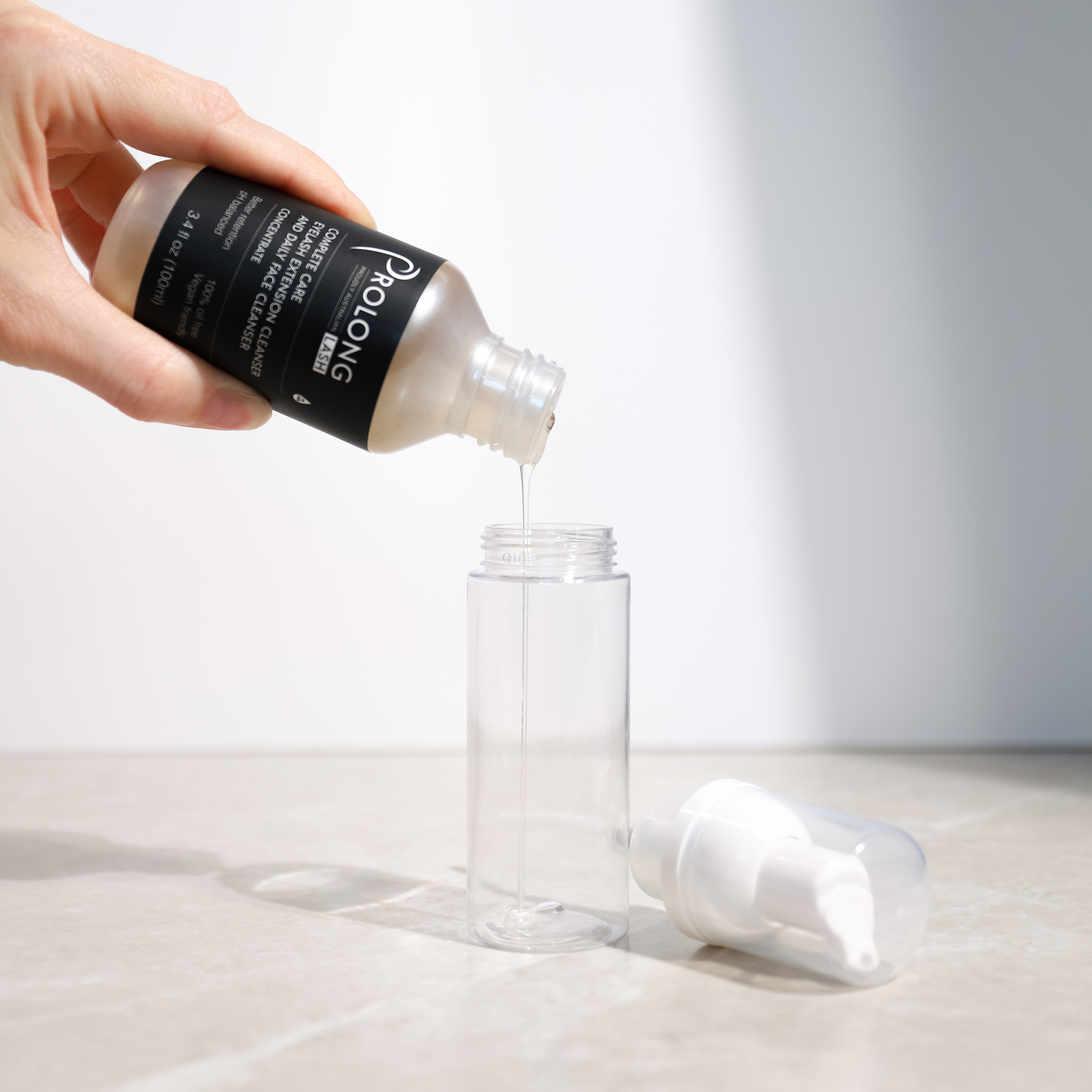
Cleanser ConcentrateProlong Lash Cleanser Concentrate is FDA MoCRA registered. You are allowed to dilute the concentrate with distilled water and apply your own label for use in your salon or to gift. If you intend to sell it, you may be required to apply as a processor with FDA MoCRA.
-

Prolong Lash Foaming Pump
Prolong Lash Foaming PumpThe world's most loved lash cleanser in a convenient, pre-mixed foam pump. Made with the same formula as our world-renowned cleanser concentrate. Our foaming pumps are FDA MoCRA Registered and ready to sell to your customers.
-

Private Label 2 fl oz / 60ml
Private Label 60mlMake It Your Own!
We offer ready-made, unbranded foaming pumps, which allow you to apply your own business logo, no FDA registration required. The pump contains the same quality FDA MoCRA Registered Prolong Lash Cleanser as our branded Foaming Pumps.


